
The best time to trim many trees in Texas is during their dormant season, typically from late fall through winter. However, the ideal pruning schedule depends on the tree species, local climate, and the condition of the tree. In Central Texas, oak trees require special attention because pruning during certain months can increase the risk of oak wilt. Understanding these seasonal differences helps homeowners maintain healthier trees and avoid unnecessary damage.
| Key TakeawaysLate winter is a good time to trim many trees: November through March can be suitable for routine pruning, depending on the tree species and local conditions.Bare branches make pruning easier: Without leaves, you can see the tree’s structure more clearly and identify crossing, damaged, and poorly positioned branches.Texas oak trees need special care: Avoid pruning or wounding oak trees from February through June to help reduce the risk of oak wilt.Pruning time depends on the tree type: Flowering trees, evergreens, and fruit trees may need different schedules, so identify the species before trimming. |
Why Does Tree Trimming Timing Matter?
Tree trimming does more than improve the appearance of your yard. Proper pruning removes damaged branches, encourages strong growth, and helps maintain a tree’s natural shape. It can also improve clearance around roofs, driveways, walkways, and other outdoor areas.
Tree trimming, also called tree pruning, involves removing selected branches to improve a tree’s structure, manage growth, and address damaged limbs. Understanding the purpose of pruning helps homeowners determine when trimming is necessary.
What Is the Best Season to Trim Trees?
Each season offers different benefits, but knowing when to trim trees or when to prune trees depends on the tree species, its growth cycle, and the work required.
Winter: Best for Many Routine Pruning Jobs
Late winter is often a good time to trim many deciduous trees before new spring growth begins. Trees that lose their leaves are easier to inspect, making it simpler to identify crossing, damaged, and poorly positioned branches.
Winter pruning can help homeowners:
- Remove weak or damaged branches before spring growth.
- Improve the tree’s structure and shape.
- Identify branches that interfere with nearby structures.
- Prepare suitable trees for healthy seasonal growth.
However, Texas homeowners should avoid routine oak pruning from February through June because of the risk of oak wilt. Texas A&M Forest Service recommends avoiding pruning or wounding oak trees during this period.
Spring: Focus on Necessary and Selective Trimming
Spring is when many trees produce new leaves, shoots, and flowers. Heavy pruning of healthy, actively growing branches can place additional stress on a tree, especially if it is already weakened by drought or other environmental conditions.
Spring is generally better suited to removing hazardous or broken branches when needed. For flowering trees, wait until blooming finishes before pruning species that develop their flowers on older growth.
Oak trees need particular care during this season. Avoid unnecessary pruning and other injuries from February through June to reduce the risk of oak wilt.
Summer: Remove Hazards and Monitor Growth
Summer heat can place additional stress on trees in Central Texas. During periods of drought, unnecessary pruning may further reduce a tree’s ability to recover.
Light trimming may be appropriate for specific needs, such as maintaining clearance or removing hazardous branches. However, avoid excessive canopy removal, especially during hot, dry weather.
Inspect trees for dead limbs, branches rubbing against buildings, and growth interfering with walkways. If the work involves large limbs or high branches, professional assistance is the safer choice.
Fall: Plan Ahead for Seasonal Pruning
Fall can be a useful time to inspect trees and plan pruning work before winter. In Texas, it can also provide a suitable window for routine oak pruning after the oak wilt risk period has passed.
Avoid unnecessary heavy pruning late in the growing season when it could encourage tender new growth before a freeze. Instead, focus on identifying problem branches and arranging appropriate work for the species and conditions.
When Is the Best Time to Trim Oak Trees in Texas?
Oak trees require special consideration because oak wilt is a serious tree disease affecting Central Texas. The disease can spread when sap-feeding beetles carry fungal spores to fresh wounds on susceptible oak trees.
To help protect oak trees:
- Avoid pruning from February through June. This is the main recommended period to avoid creating new wounds on oaks in Texas.
- Schedule routine pruning outside this window. Late fall and winter, particularly December and January, are commonly recommended periods.
- Protect fresh wounds. Texas A&M Forest Service recommends painting fresh oak wounds immediately, including pruning cuts, with an appropriate wound dressing or paint.
- Limit unnecessary injuries. Lawn equipment, construction, and careless cutting can also damage bark and create potential entry points for infection.
If an oak has a broken limb that threatens people or property, safety comes first. Arrange necessary emergency work rather than leaving a dangerous branch in place. For guidance, consult Texas A&M Forest Service’s oak wilt prevention recommendations.
Does the Type of Tree Affect Trimming Time?
Yes. Different trees have different growth and flowering patterns, so one schedule does not work for every species.
Deciduous Shade Trees
Many deciduous trees benefit from pruning during the dormant season, often in winter. Without leaves, the branch structure is easier to evaluate, and the tree can begin responding to pruning as growth resumes in spring.
Flowering Trees
The right time depends on when the tree forms its flower buds. Trees that bloom in spring often develop flowers on older growth, so pruning immediately after flowering helps preserve the next season’s display.
Trees that flower on new growth may be better suited to pruning before their active growing season. Identify the species before making substantial cuts.
Evergreen Trees
Evergreen trees do not necessarily need the same dormant-season approach as deciduous trees. Light pruning may be possible at other times, depending on the species and purpose.
Avoid cutting back excessively or removing large amounts of healthy foliage. Some evergreen species respond poorly to cuts made into older wood that cannot produce new shoots.
Fruit Trees
Fruit trees require species-specific pruning because the timing can affect flowering, fruit production, and tree structure. Follow recommendations for the particular fruit tree rather than applying a general shade-tree schedule.
Best Time to Trim Different Types of Trees in Texas
The ideal time to trim trees varies depending on their species, flowering cycle, and growth pattern. Some trees benefit from dormant-season pruning, while others need trimming after flowering to protect their next season’s blooms.
| Tree Type | Best Time to Trim | Important Considerations |
| Oak Trees | Late fall and winter, especially December and January | Avoid pruning or wounding from February through June to reduce the risk of oak wilt. |
| Fruit and Pecan Trees | Late winter, before spring growth begins | Pruning can improve branch structure, airflow, and fruit production. |
| Spring-Flowering Trees | Immediately after flowering | Helps preserve flower buds for the following growing season. |
| Maples and Elms | Late fall or winter, depending on species | Dormant-season pruning is generally suitable for routine maintenance. |
| Dead, Broken, or Hazardous Branches | Any time of year, when necessary | Remove dangerous branches promptly to protect people and property. |
Important: Avoid pruning or wounding oak trees from February through June. Dead or hazardous branches may require prompt attention at any time, but oak-related disease precautions should still be followed.
Signs Your Trees Need Trimming
Seasonal timing is important, but some problems should not wait for the ideal pruning window. Inspect your trees periodically for these warning signs:
- Dead or broken branches: These may fall and cause injuries or property damage.
- Branches touching the roof: Contact can damage roofing materials and create access points for pests.
- Crossing branches: Repeated rubbing can damage bark and create wounds.
- Overgrown limbs near walkways: Low branches may interfere with people, vehicles, or routine yard activities.
- Visible storm damage: Cracked limbs and hanging branches may require prompt attention.
Dead, diseased, or damaged branches can often be removed throughout the year when necessary. Oak trees still require precautions because fresh wounds can increase the risk of oak wilt.
For routine maintenance and corrective pruning, explore our tree trimming and pruning services in Round Rock.
Never attempt to remove branches near power lines or large limbs that could fall unpredictably. These situations require qualified professionals.
Common Tree Trimming Mistakes to Avoid
Even when you choose the right season, improper pruning can damage a tree.
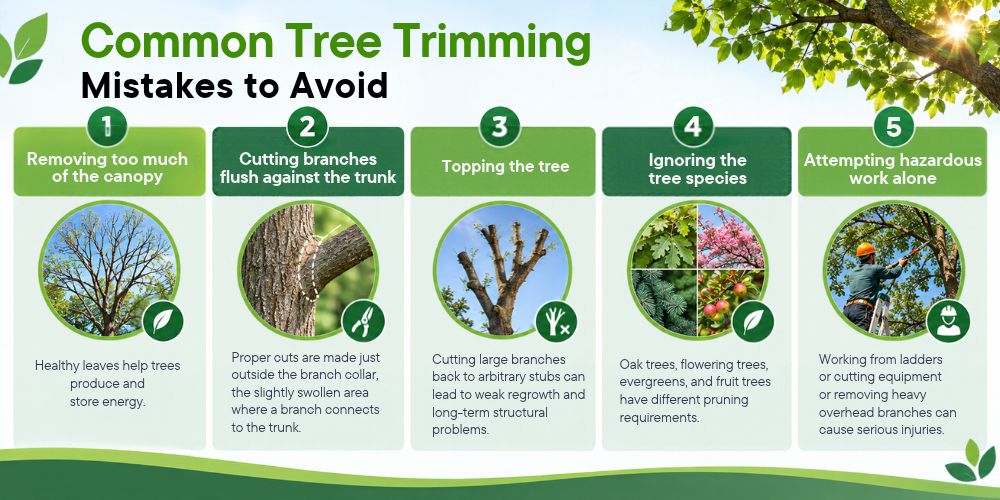
Removing too much of the canopy: Healthy leaves help trees produce and store energy. Avoid excessive pruning; Texas A&M Forest Service advises against removing more than 25% of a tree’s crown at one time.
Cutting branches flush against the trunk: Proper cuts are made just outside the branch collar, the slightly swollen area where a branch connects to the trunk. Cutting into this area can interfere with the tree’s natural wound response.
Topping the tree: Cutting large branches back to arbitrary stubs can lead to weak regrowth and long-term structural problems.
Ignoring the tree species: Oak trees, flowering trees, evergreens, and fruit trees have different pruning requirements. Identify the species before deciding when and how much to trim.
Attempting hazardous work alone: Working from ladders with cutting equipment or removing heavy overhead branches can cause serious injuries. Hire an experienced tree service for work beyond your capabilities.
| Important Tree Pruning Tips for Texas HomeownersProper pruning helps protect trees and maintain healthy growth. Keep these tips in mind:Avoid Heavy Pruning in Extreme Weather: Limit pruning during extreme heat, drought, or before freezing weather.Limit Canopy Removal: Avoid removing more than 25% of a tree’s live canopy in one season.Make Proper Cuts: Cut just outside the branch collar. Avoid topping trees, and sanitize tools between trees to reduce disease spread.For more guidance, visit Texas A&M AgriLife Extension or Texas A&M Forest Service. |
Should You Trim Trees Yourself or Hire a Tree Service?
Small, reachable branches may be manageable for homeowners with the right tools and knowledge. Larger trees, heavy limbs, extensive deadwood, and branches near structures require more careful planning.
When a tree needs to be removed rather than pruned, learn more about our tree removal services.
A qualified tree service can assess the tree’s condition, identify branches that need attention, and recommend an appropriate pruning schedule. Professional help is particularly valuable when working with mature oaks or trees that have suffered storm damage.
For homeowners in Round Rock and nearby Central Texas communities, local climate conditions and oak wilt prevention should be part of every tree-trimming plan.
Final Thoughts
The best time to trim trees depends on the species, its condition, and the purpose of pruning. Late winter is suitable for many routine trimming jobs, while flowering trees and other species may need a different schedule. In Central Texas, oak trees require special attention because of oak wilt, making proper timing and wound protection especially important.
Regular tree inspections and proper pruning can help maintain healthy growth and reduce the risk of damaged or hazardous branches. If your trees need professional attention, The Works Lawn Service provides tree care services in Round Rock, TX, and surrounding areas. Explore our tree trimming services to discuss the right approach for your property.
Frequently Asked Questions
What Is the Worst Time to Prune Trees?
The worst time to prune trees depends on the species and local conditions. In Texas, avoid pruning or wounding oak trees from February through June because of the risk of oak wilt. Other trees may require different timing based on their flowering and growth patterns.
How Often Should Trees Be Trimmed?
Tree trimming frequency depends on the species, age, health, and location of the tree. Inspect trees regularly and prune when needed rather than following a fixed schedule for every tree.
Is Tree Trimming the Same as Tree Pruning?
Tree trimming and tree pruning are often used interchangeably. Pruning generally focuses on tree health, structure, and safety, while trimming may also involve managing growth and maintaining clearance.
Can You Trim Trees in the Summer in Texas?
Yes, some tree trimming can be performed during summer, particularly when removing dead, broken, or hazardous branches. However, excessive pruning during extreme heat or drought can place additional stress on trees. For routine trimming, consider the tree species, its condition, and the local weather before scheduling the work.