Your lawn is trying to tell you something. The water pooling near the driveway. The brown patches that never bounce back. The grass that looks tired even when you water it religiously. These are not random problems. They are signs of compacted soil. And the fix starts with knowing when to aerate your lawn.
Aeration is not complicated. But timing it wrong in Texas can do more harm than good. Aerate too early and you stress grass that is still waking up. Aerate too late and the summer heat punishes the open soil before roots can recover.
This guide will give you the exact timing for your region, your grass type, and your soil. No guessing. No vague advice like “late spring.” Just clear answers built for Texas lawns specifically.
What Is Lawn Aeration and Why Does It Matter in Texas?
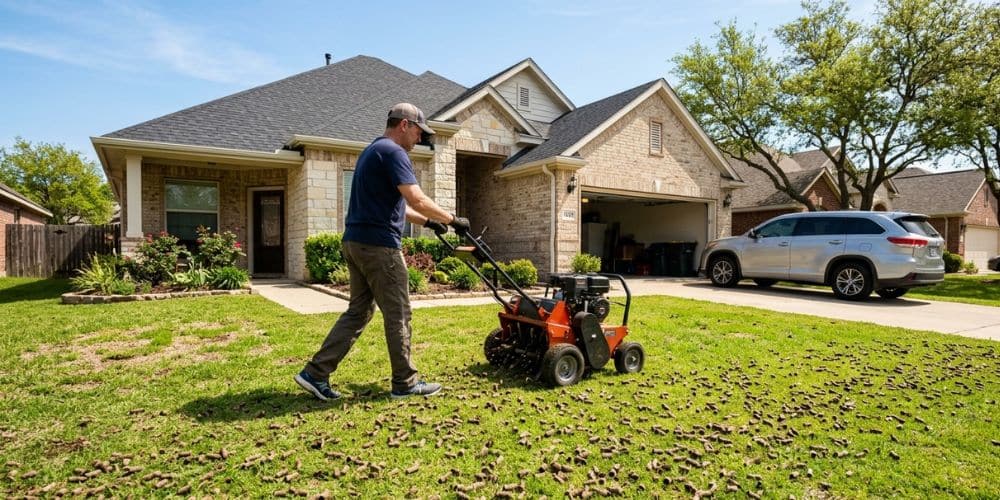
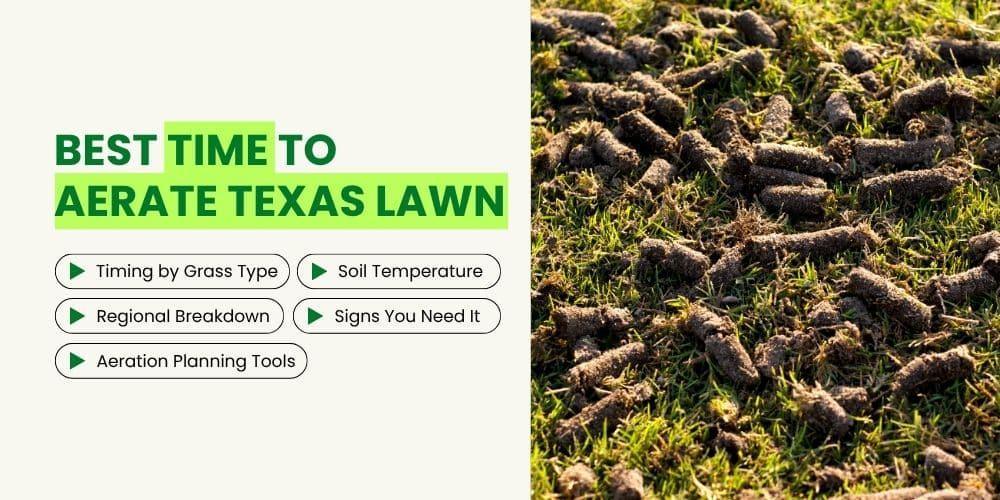
Lawn aeration is the process of pulling small plugs of soil out of your lawn using a machine called a core aerator. These plugs create channels that allow air, water, and nutrients to reach the root zone. That is the part of the soil where your grass actually feeds and grows.
In Texas, this matters more than in most states. Why? Because Texas soils compact aggressively.
According to Texas A&M AgriLife Extension, the heavy clay soils common across the Blackland Prairie, Central Texas, and North Texas create one of the most compaction-prone lawn environments in the country. When clay soil compacts, it forms an almost brick-like layer that blocks water, oxygen, and fertilizer from getting through. You end up watering a lawn that cannot absorb the water. You end up fertilizing a lawn that cannot use the nutrients.
Aeration breaks that cycle. It is one of the highest-impact things you can do for a Texas lawn, but only when done at the right time.
When to Aerate Your Lawn in Texas: The Short Answer
The best time to aerate your lawn in Texas depends on what type of grass you have.
| Grass Type | Best Time to Aerate | Soil Temp Trigger |
| Bermuda | April to June | 65°F or above |
| St. Augustine | April to August (earlier is better) | 65°F or above |
| Zoysia | Late April to June | 65°F or above |
| Buffalo grass | May to June | 65°F or above |
| Fescue / Ryegrass / Kentucky Bluegrass | September to mid-October | Below 70°F and cooling |
The key trigger is soil temperature, not the calendar. Warm-season grasses should be aerated after soil temperatures consistently reach 65°F or above. At that point, the grass is actively growing and can recover from aeration within 2 to 3 weeks.
You can check your exact soil temperature using this free tool: GreenCast Soil Temperature Map. Enter your zip code and watch the soil temp daily. When it holds at 65°F for 3 to 5 days in a row, your window is open.
When to Aerate Lawn in Texas: Region-by-Region Breakdown
Texas is not one climate. It is five. The timing that works in Dallas will stress a lawn in Corpus Christi. Here is what you need to know by region.
| Region | Cities | Best Aeration Window | Common Grass | Soil Type |
| North Texas | Dallas, Fort Worth, Denton | Late April to mid-June | Bermuda, Zoysia | Heavy clay |
| Central Texas | Austin, Waco, San Marcos | Mid-April to May | St. Augustine | Clay over caliche |
| Southeast Texas | Houston, Beaumont, Galveston | March to May | St. Augustine, Bermuda | Sandy to clay |
| South Texas | San Antonio, Laredo, Corpus Christi | Mid-March to late April | St. Augustine, Buffalo | Sandy, alkaline |
| West Texas / Panhandle | El Paso, Lubbock, Amarillo | May to June (warm) / Sept to Oct (cool) | Buffalo, Bermuda, Fescue | Alkaline, caliche |
North Texas (Dallas, Fort Worth, Denton, Wichita Falls)
Most North Texas lawns run on Bermuda or Zoysia grass rooted in heavy clay soil. That clay compacts hard under foot traffic and irrigation cycles.
Best time to aerate: Late April through mid-June
Soil temperature trigger: Wait until soil temperatures hold at 65°F consistently. In the DFW area, that is usually the last week of April to early May.
North Texas is also where fall aeration makes the most sense as a second round. If you plan to overseed with winter rye grass, aerate in late September to early October before spreading seed.
Central Texas (Austin, Waco, San Marcos, Killeen)
Central Texas lawns deal with a notorious mix: thin topsoil layered over caliche (calcium carbonate-rich limestone). Water does not drain well. Roots cannot go deep. Aeration here is less optional and more essential.
Best time to aerate: Mid-April through May
Soil temperature trigger: Austin typically crosses the 65°F soil temp mark in early to mid-April.
St. Augustine is the most common grass in this region. It responds especially well to spring aeration followed immediately by fertilization. The open holes from aeration let nutrients reach the root zone before summer heat arrives.
Houston and Southeast Texas (Houston, Beaumont, Galveston)
Southeast Texas is hot, humid, and wet. Soils here lean sandy to sandy-loam near the coast, but inland areas around Houston carry heavier clay. The humidity also creates thatch buildup faster than in drier parts of Texas.
Best time to aerate: March through April near the Gulf Coast; April to May further inland
Note: Because the growing season starts earlier here, Houston-area lawns often have a wider spring aeration window. Do not wait until June. By then, summer stress has already begun.
San Antonio and South Texas (San Antonio, Laredo, Corpus Christi)
South Texas warms up fast. Soil temperatures hit 65°F earlier than anywhere else in the state. In a warm year, that can happen as early as mid-March. This region also receives less reliable rainfall, making compaction-fighting aeration critical for drought resilience.
Best time to aerate: Mid-March through late April
Tip: Because South Texas summers arrive early and hit hard, spring is the only practical aeration window. Do not wait. Aerate when the grass first shows strong green-up.
West Texas and the Panhandle (El Paso, Lubbock, Amarillo, Midland)
West Texas is drier and has more alkaline, caliche-heavy soils. The Panhandle leans cooler and often supports cool-season grasses or drought-tolerant warm-season species like Buffalo grass.
Warm-season grasses in West Texas: Aerate May through June. Soil warms later here than in Central or South Texas. Cool-season and Panhandle lawns: Aerate in September to October for fall recovery.
When Is the Best Time to Aerate a Texas Lawn by Grass Type?
If you know your grass but not your region, use this as your guide.
| Grass Type | Aerate When | How Often | Recovery Speed |
| Bermuda | April to June | Once or twice a year | Fast (2 to 3 weeks) |
| St. Augustine | April to August | Once a year | Moderate (3 to 4 weeks) |
| Zoysia | Late April to June | Once a year | Slow (4 to 6 weeks) |
| Buffalo grass | May to June | Once a year (or every other year) | Moderate |
| Fescue / Cool-season | September to mid-October | Once a year | Fast in cool temps |
Bermuda grass: April to June is ideal. Bermuda is aggressive in warm weather and recovers fastest from aeration stress. Do not aerate before the grass is actively growing. Aerating too early will expose bare soil to weed invasion. Read our guide on how to get rid of weeds in your lawn to stay ahead of them. The GrassDaddy Pre-Emergent Map can also help you time aeration around your pre-emergent schedule to avoid undoing weed control.
St. Augustine grass: April through August, but earlier in the season is better. St. Augustine spreads via stolons above ground, not underground runners, so it needs active growth to recover from aeration holes.
Zoysia grass: Late April through June. Zoysia is the slowest-growing of the warm-season grasses, which means it takes longer to recover. Aerate when it is growing strong, not just waking up.
Buffalo grass: May through June. This drought-tolerant native does not need frequent aeration. Once a year is enough unless you have heavy clay soil.
Fescue and cool-season grasses (North Texas/Panhandle): Early fall, September to mid-October. Avoid spring aeration for these grasses. Spring aeration disrupts recovery from winter dormancy and opens the door for summer weeds. If weeds do break through after aeration, knowing when to apply post-emergent herbicide in Texas will help you clean them up quickly.
Signs Your Texas Lawn Needs Aeration Right Now
You do not always need to wait for a scheduled window. If your lawn is showing these signs, it needs aeration regardless of the month:
- Water puddles after rain instead of soaking in within 30 minutes
- A screwdriver cannot push 2 inches into the soil without real force
- Grass thins or browns in high-traffic areas like walkways and play areas
- Fertilizer does not seem to work even after correct application
- Thatch buildup over ½ inch thick between the grass blades and the soil
If you see three or more of these signs, do not wait for the “perfect” month. Aerate as soon as your grass is actively growing.
Quick test: Push a screwdriver 2 inches into your lawn. If it takes real force, your soil is compacted, and aeration is overdue.
When NOT to Aerate Your Texas Lawn
This is the part most guides skip. And it matters just as much as knowing when to go.
| Situation | Why to Avoid Aeration |
| Active drought with no irrigation | Open holes dry out roots faster and add stress |
| Mid-July through August heat (100°F+) | Exposed roots can burn before recovering |
| Dormant grass (winter months) | No active growth means no recovery, just weed channels |
| Freshly laid sod (under 12 months old) | Shallow roots tear before they anchor |
| Waterlogged soil after heavy rain | Wet clay smears shut instead of opening channels |
Do not aerate during a drought.
Open aeration holes in dry, stressed soil dry out faster and deepen the stress on roots. If your lawn has been dry and stressed, water it deeply for two to three days before aerating. Or wait for a good natural rain. Dry soil defeats the whole purpose.
Do not aerate right before heavy rain.
If more than an inch of rain is coming within 48 hours, wait. Heavy rain fills fresh aeration holes with runoff, closes the channels, and turns your lawn into a muddy mess.
Do not aerate during peak summer heat.
Mid-July through August in Texas brings 100°F+ days. Core aeration exposes roots temporarily. In extreme heat, that brief exposure can damage grass that was already stressed. Late spring is your window, not midsummer.
Do not aerate dormant grass.
Aerating Bermuda in January does nothing except create channels for weed seeds to settle into. Aerate only during active growth. If you are unsure whether your grass is dormant or dead, our winter lawn care guide can help you tell the difference.
Do not aerate right after laying new sod.
New sod needs 6 to 12 months to establish a root system before aeration is beneficial. Aerating too early tears up shallow roots before they have anchored.
Tools to Get Your Aeration Timing Right
Picking the right week to aerate is not guesswork. These free tools give you the actual data you need before you schedule.
| For soil temperature readings at your exact Texas zip code, the GreenCast Soil Temperature Map tracks real-time soil conditions at 2-inch depth. When it holds at 65°F or above for 3 to 5 consecutive days, your grass is ready.For current soil moisture levels in your area, the GreenCast Soil Moisture Map shows whether your soil is in the ideal range for aeration or still too dry or too saturated to get clean plugs.To check if your county is under active drought conditions, the US Drought Monitor for Texas updates every week with county-level drought status. If your area is showing D2 or worse, hold off and water first.For rain in the next 48 hours, check the National Weather Service 7-day forecast before you book. Aerating right before a heavy storm closes the channels before they can do any good.For timing aeration around your pre-emergent schedule, the GrassDaddy Pre-Emergent Map shows live seasonal guidance by state so you do not accidentally break your weed barrier by aerating at the wrong time.Checking these tools before you aerate ensures you are hitting the right window. Not guessing based on a date on the calendar. |
How Often Should You Aerate a Texas Lawn?
Not every Texas lawn needs the same schedule. Your soil type is the deciding factor.
| Soil Type | Where in Texas | How Often to Aerate |
| Heavy clay | Dallas, Austin, San Antonio, Waco | Twice a year (spring and fall) |
| Loamy | East Texas, parts of Central Texas | Once a year |
| Sandy / Sandy-loam | Gulf Coast, South Texas | Once a year or every other year |
| Caliche / Alkaline | West Texas, Hill Country | Once a year (spring only) |
| Fescue / Cool-season | September to mid-October | Once a year |
Most Texas lawns benefit from aeration once a year. If you have heavy clay soil, which is common in Dallas, Austin, and San Antonio, aerating twice a year (once in spring, once in fall) gives significantly better results.
According to Texas A&M AgriLife Extension, lawns with clay-dominant soils lose water absorption efficiency rapidly between aeration cycles. Twice-yearly aeration in clay conditions is not excessive. It is maintenance.
Sandy soils in coastal and South Texas regions can go once a year or even every other year if the lawn is healthy and traffic is light.
The Right Way to Aerate: Quick Checklist
You do not need a full how-to guide to do this right. Just follow this sequence:
- Two days before: Water your lawn deeply so soil is moist but not muddy
- Day of: Flag all sprinkler heads and buried lines
- During: Make two passes, one north-south and one east-west, for full coverage
- After: Leave the soil plugs on the lawn. They break down in 1 to 2 weeks and feed the soil
- Same week: Apply fertilizer. The open channels get nutrients directly to the root zone
Also Read: When to Fertilize Lawn in Spring, Texas
Final Word: Timing Is Everything in Texas
When it comes to knowing when to aerate your lawn, Texas homeowners have one real advantage. The growing season is long. You have a wide window in spring. Use it before summer heat closes it.
Check your soil temperature. Know your grass. Know your region. Aerate at the moment your lawn is strongest so it comes back even stronger.
Your lawn does not need more water or more fertilizer. It needs to be able to use them. That starts with aeration at the right time.
If you want expert help getting the timing and process right, The Works Lawn Service can handle professional lawn aeration tailored to your grass type, soil, and area across Round Rock.