

Water pooling around your yard or foundation is more than an inconvenience. Over time, excess moisture can weaken soil, damage landscaping, and place pressure on your home’s structure. Many homeowners dealing with yard drainage problems look for a reliable residential drainage solution that works long term.
A French drain is a gravel-filled trench that contains a perforated pipe designed to redirect water away from problem areas. As a proven yard drainage system, it helps manage excess groundwater, improve drainage efficiency, and protect your Texas property from moisture-related damage.
Many areas of Texas have dense clay soil that slows natural drainage, making subsurface solutions especially valuable.
This comprehensive guide explains what a French drain system is, how French drains work, the different types available, and how professional French drain installation ensures lasting performance.
What Is a French Drain System?
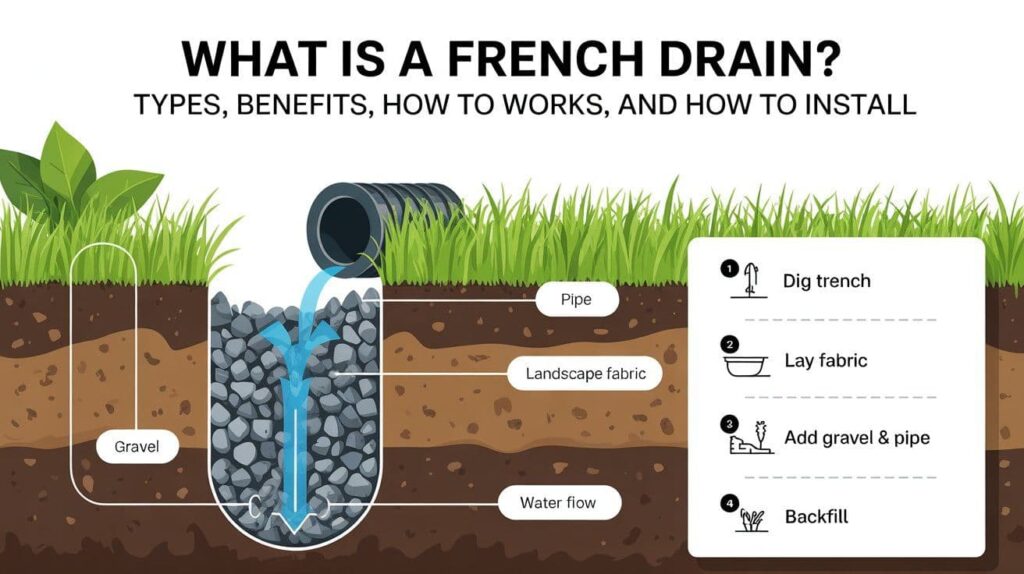
A French drain system is an underground subsurface drainage method designed to collect and redirect excess water away from your yard, foundation, or landscaped areas. It typically consists of a perforated French drain pipe placed inside a gravel drainage trench that is slightly sloped to allow gravity to move water away.
The main function of a French drain system is to provide controlled water runoff control and reduce soil saturation around structures.
Instead of allowing standing water in yard areas or water pooling near the home, this underground drainage approach creates a safe path for water to exit the property.
Main Components of a French Drain
- Perforated French drain pipe
- Gravel drainage trench
- Sloped French drain trench
- Filter fabric (geotextile fabric)
- Safe discharge outlet
Together, these components form an effective foundation drainage system that works continuously once installed.
How French Drains Work
French drains work by using gravity to capture and redirect excess groundwater away from areas where moisture causes problems.
Step-by-Step Process
Water enters the gravel trench
Rainwater and groundwater seep through surrounding soil into the gravel-filled drainage trench, helping address poor yard drainage conditions.
Gravel filters sediment
The clean gravel promotes strong drainage efficiency while blocking debris that could clog the system.
Perforated drain pipe collects water
Water flows through openings in the perforated drain pipe and into the French drain pipe.
Gravity moves the water away
Because the trench is sloped, water naturally travels through this subsurface drainage system without pumps.
Water discharges safely
The system releases water at a designated outlet such as:
- Pop-up emitter
- Drainage ditch
- Dry well
- Lower area of the yard
This gravity-driven water diversion system is what makes French drains highly effective as an exterior drainage solution.
Types of French Drains
Different drainage challenges require different system designs. Choosing the right landscape drainage system depends on where excess water collects.
Exterior French Drain
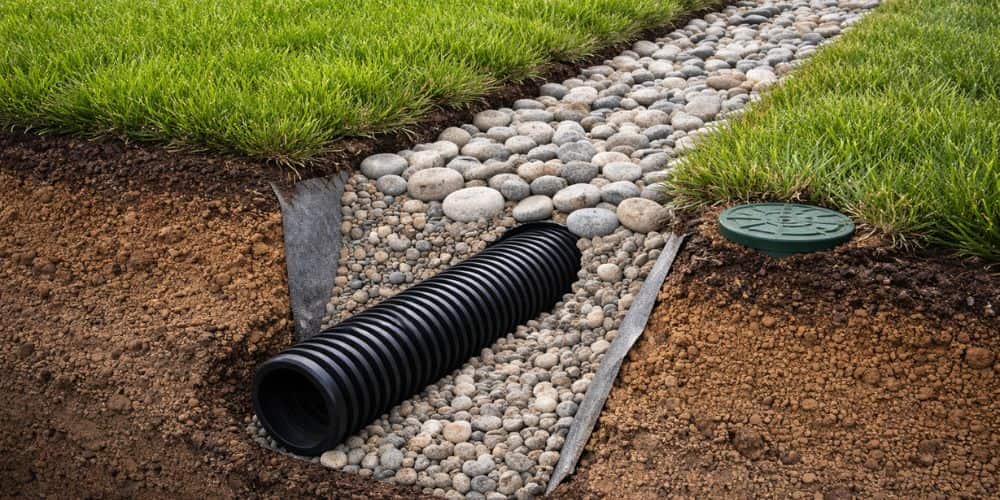
Best for: foundation water protection and perimeter drainage
Installed around the outside of a home, this foundation drainage system intercepts groundwater before it reaches the structure. Many Texas homeowners choose this exterior drainage solution to reduce hydrostatic pressure and improve long-term moisture control.
Common benefits
- Protects foundation walls
- Reduces hydrostatic pressure
- Improves perimeter drainage
- Supports long-term moisture control
Interior French Drain
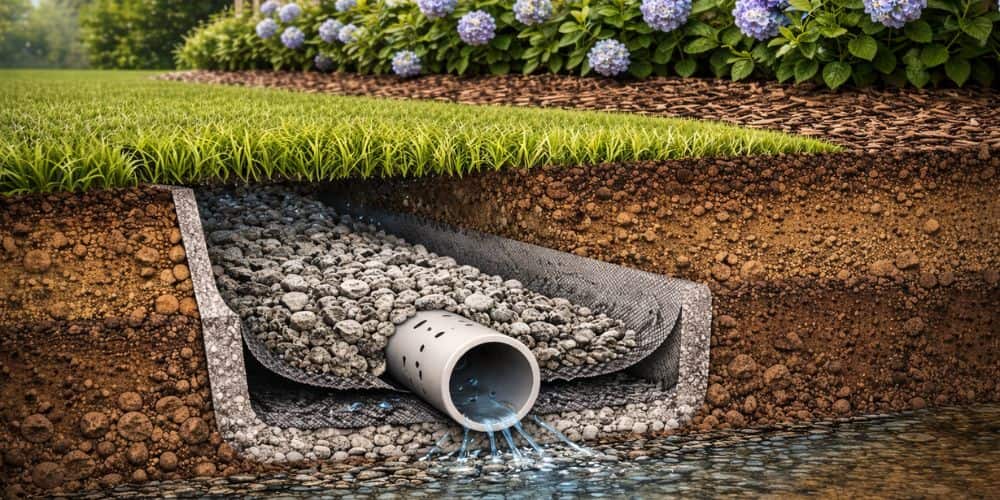
Best for: basement water management
An interior system is installed along the inside edge of a basement floor. It captures excess groundwater entering through foundation walls and directs it to a sump pump.
Because many Texas homes lack basements, this type is less common but still useful in specific cases.
Yard French Drain System
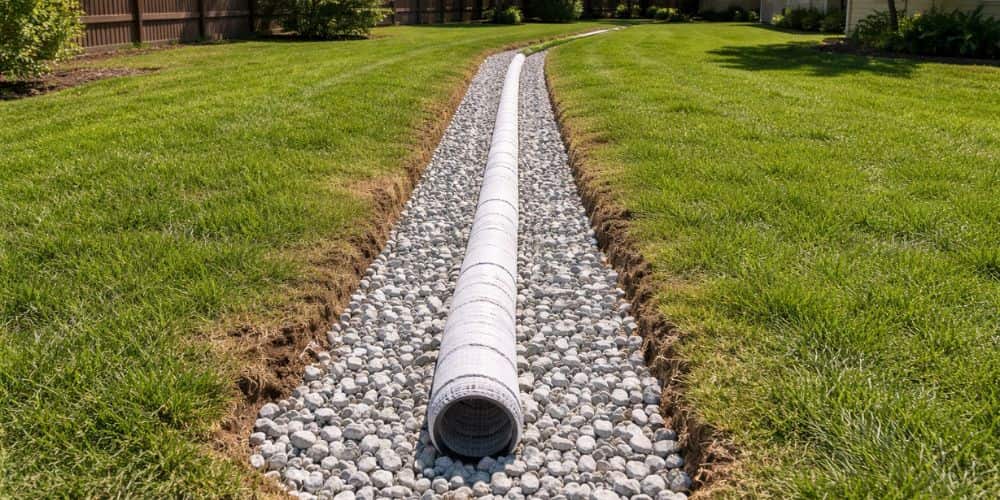
Best for: wet yard solutions and lawn drainage problems
This type of yard drainage system targets low spots where standing water in yard areas frequently occurs. Homeowners searching for a backyard drainage fix often benefit from this approach.
Typical use cases
- Low areas in lawns
- Between homes
- Near downspouts
- Around patios and walkways
Curtain French Drain

Best for: intercepting water on slopes
A curtain drain is a shallow French drain trench installed across a slope to stop surface and subsurface water before it reaches structures or low areas.
Retaining Wall French Drain
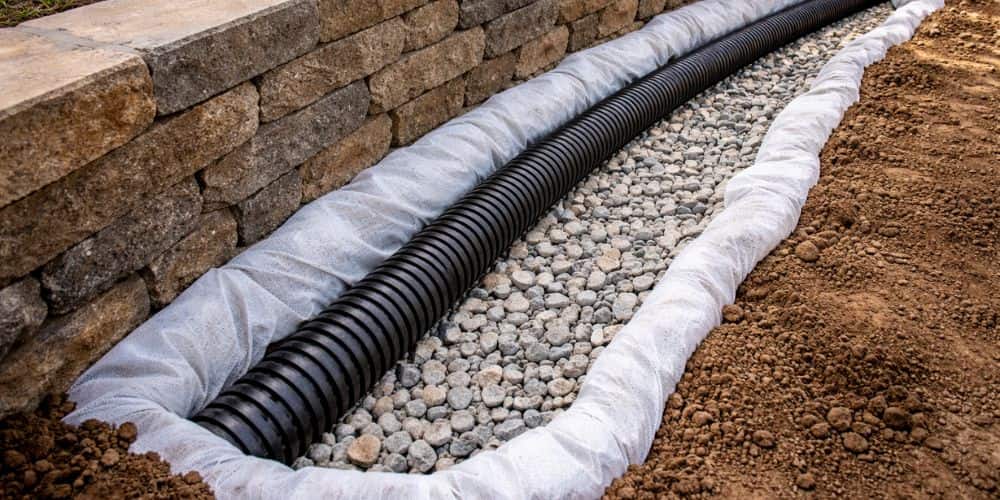
Best for: relieving pressure behind retaining walls
Water buildup behind retaining walls creates hydrostatic pressure that can lead to structural damage. Installing a perimeter drainage system behind the wall improves long-term stability.
French Drain vs Other Yard Drainage Systems
Homeowners often compare drainage options when dealing with yard drainage problems. Each system manages water differently depending on whether the issue is surface runoff or subsurface saturation.
| Drainage System | Best For | Visibility | Water Type Handled | Key Limitation |
| French drain | Subsurface water and foundation protection | Hidden underground | Groundwater and soil saturation | Requires proper slope |
| Surface drain | Patios, driveways, hard surfaces | Visible grate | Surface runoff only | Limited underground control |
| Channel drain | Linear hardscape areas | Visible channel | Surface sheet flow | Not designed for deep groundwater |
| Dry well | Temporary water storage | Underground | Collected runoff | Can fill quickly in heavy rain |
In many residential situations, a properly installed French drain system provides more comprehensive subsurface water control than surface-only drainage methods.
Benefits of a French Drain System
A properly installed system offers powerful moisture control and long-term protection.
Prevents Standing Water
French drains remove excess groundwater efficiently, helping eliminate puddles and common wet yard solutions issues.
Protects the Foundation
Redirecting water away from the home reduces hydrostatic pressure — a leading cause of foundation damage.
Improves Yard Drainage
Lawns dry faster and remain usable throughout the year, even in areas with Texas clay soil.
Reduces Soil Erosion
By improving water runoff control, the system helps keep soil and mulch in place.
Improves Overall Drainage Efficiency
A well-designed landscape drainage system enhances long-term yard performance and reduces recurring water issues.
Long-Term, Low-Maintenance Solution
When installed correctly, French drains function for many years with minimal upkeep.
Signs You May Need a French Drain
You may need this residential drainage solution if you notice:
- Standing water in yard after storms
- Water pooling near foundation
- Persistent poor yard drainage
- Soggy lawn areas
- Soil erosion around landscaping
- Damp crawl space conditions
- Excess groundwater after heavy Texas rain
Homes built on Texas clay soil are especially prone to slow natural drainage.
Importance of Geotextile Fabric
Geotextile fabric is critical for maintaining long-term drainage efficiency.
Why Fabric Matters
- Prevents soil from clogging gravel
- Maintains consistent subsurface drainage
- Extends system lifespan
- Supports reliable moisture control
Most professional installations wrap the gravel drainage trench with fabric to protect the French drain pipe.
How French Drain Installation Works
Proper French drain installation is the most important factor in long-term performance. Even a well-designed system can fail if the slope, materials, or trench preparation are incorrect. Below is a more detailed look at how professionals install a reliable subsurface drainage system.
Step 1: Site Evaluation and Drainage Planning
Every successful project begins with a careful analysis of the property. Professionals study how water currently moves across the yard and identify the root cause of the drainage issue rather than just treating surface symptoms.
During this phase, contractors evaluate:
- Low spots and standing water in yard areas
- Soil type (especially Texas clay soil)
- Existing grading and slope patterns
- Distance and elevation of the discharge point
- Nearby utilities, irrigation lines, and structures
This step ensures the French drain system will use gravity effectively and function as a long-term residential drainage solution.
Step 2: Marking the Drainage Path
Once planning is complete, the exact French drain trench route is marked. The path is carefully designed to follow the natural flow of water while maintaining a consistent downward slope toward the outlet.
Proper layout helps:
- Prevent future water bottlenecks
- Maximize drainage efficiency
- Avoid underground obstacles
- Ensure smooth water diversion
Step 3: Trench Excavation
The French drain trench is excavated along the marked path. Precision during digging is critical because uneven trench bottoms can create low spots where water may stagnate.
Typical residential trench dimensions
- Depth: 12–24 inches
- Width: 6–12 inches
In areas with severe yard drainage problems, deeper trenches may be required to intercept excess groundwater effectively.
Step 4: Establishing the Proper Slope
Correct slope is one of the most important parts of French drain installation. Without enough pitch, water will sit in the pipe instead of flowing away.
Common professional guideline:
Approximately 1 inch of drop for every 8–10 feet of pipe.
Installers typically use:
- Laser levels
- String lines
- Grade stakes
This ensures the subsurface drainage system maintains continuous gravity flow from start to discharge.
Step 5: Installing Geotextile Fabric
A high-quality geotextile fabric is placed inside the trench before gravel is added. This fabric acts as a filtration barrier that allows water to pass while blocking soil particles.
Benefits include:
- Prevents clogging
- Protects the gravel drainage trench
- Extends system lifespan
- Maintains long-term drainage efficiency
Step 6: Adding the Gravel Base
Clean, washed gravel is poured into the bottom of the trench to create a porous base layer. This step is essential for promoting fast water movement into the French drain pipe.
The gravel base:
- Improves subsurface drainage
- Supports the perforated drain pipe
- Prevents soil compaction
- Enhances water runoff control
Step 7: Placing the Perforated Pipe
The perforated French drain pipe is carefully laid on top of the gravel base following the designed slope. Orientation of the perforations is checked to ensure optimal water collection.
Key professional checks:
- Continuous downward pitch
- Secure pipe connections
- Proper alignment toward discharge
- No sagging sections
Proper placement ensures the system functions as an effective foundation drainage system.
Step 8: Backfilling with Gravel
Additional gravel is placed around and above the pipe to create the primary water collection zone. The surrounding gravel allows groundwater to enter the system quickly from all sides.
At this stage:
- The pipe is fully surrounded
- Water flow paths are maximized
- The trench becomes a high-efficiency drainage channel
The fabric is then folded over the top to complete the protective wrap.
Step 9: Surface Restoration
After the underground work is complete, the surface is restored so the yard looks clean and natural. Most modern exterior drainage solutions are nearly invisible once finished.
Common finishing options include:
- Topsoil and sod
- Grass seed
- Decorative rock
- Mulch cover
Step 10: System Testing
Before final completion, professionals test the French drain system by running water through the line. This confirms the installation performs as expected.
Installers verify:
- Smooth water flow
- Proper outlet discharge
- No standing water inside pipe
- Consistent slope performance
This final quality check ensures the yard drainage system will perform reliably during heavy Texas rain events.
Final Thoughts
A French drain remains one of the most effective solutions for managing excess groundwater and solving persistent yard drainage problems. By understanding how French drains work and where they perform best, homeowners can choose a reliable long-term approach to moisture control.
With proper planning and professional installation, The Works Lawn Service provides trusted drainage solutions that improve yard health, enhance drainage efficiency, and help protect foundations across Texas.
Frequently Asked Questions About French Drains
Can I Install a French Drain Myself?
Small drainage projects can be handled by homeowners with basic tools and experience. Foundation or basement drainage issues are best handled by professionals to ensure correct slope and placement.
How Long Does a French Drain Last?
A properly installed French drain can last 10 to 20 years or more, depending on soil conditions, materials used, and regular maintenance.
How Long Does French Drain Installation Take?
The timeline depends on the length of the drain, soil conditions, and site accessibility. Most residential French drain installations are completed within one to three days.
Does a French Drain Work in Clay Soil?
Yes, a French drain can work in clay soil when designed correctly with adequate gravel and a proper slope to support effective water flow.