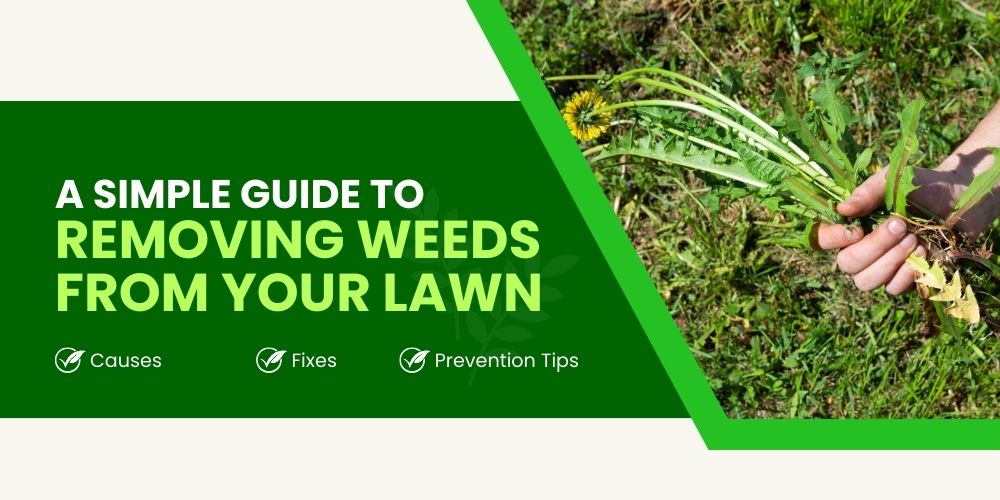
If you want to get rid of weeds in your lawn, the short answer is simple: remove the weeds you already see and strengthen your grass so new ones can’t return. Weeds appear when your lawn becomes thin, weak, or stressed, giving unwanted plants the opportunity to take over.
With the right care, timing, and a few smart techniques, you can restore a lawn that looks clean, lush, and truly healthy. Let’s walk through exactly how to make that happen.
What Causes Weeds to Grow in a Lawn?
Weeds usually take over when your grass isn’t strong enough to compete — but there’s real science behind why this happens.
1. Low Mowing Creates More Sunlight Exposure
When grass is cut too short, sunlight hits the soil surface, triggering weed seed germination. Weed seeds need warmth and light, so scalped lawns become the perfect environment.
2. Compacted Soil Helps Weeds, Not Grass
Compacted soil reduces oxygen movement and root depth for turfgrass, but many weeds (like plantain and spurges) thrive in hard, poorly aerated soil.
According to the University of Minnesota Extension, compacted soil stresses lawn grass, making it easier for weeds to invade.
3. Irregular Watering Encourages Opportunistic Weeds
Weeds like crabgrass love dry, stressed lawns, while sedges thrive in overwatered areas. Inconsistent watering weakens turf roots, giving weeds an advantage.
If you’re noticing soggy soil or yellowing plants, you may also be dealing with watering issues. Here are the key signs of overwatering in plants that every homeowner should know.
4. Nutrient Imbalance Favors Weed Growth
Low nitrogen allows clover and other broadleaf weeds to dominate.
Research from Iowa State University Extension shows that unhealthy soil nutrition directly increases weed pressure.
5. Bare Soil = Weed Opportunity
Whenever turf thins out, the open soil becomes a landing spot for airborne weed seeds. Healthy grass creates competition, but thin turf creates opportunity.
Common Types of Weed
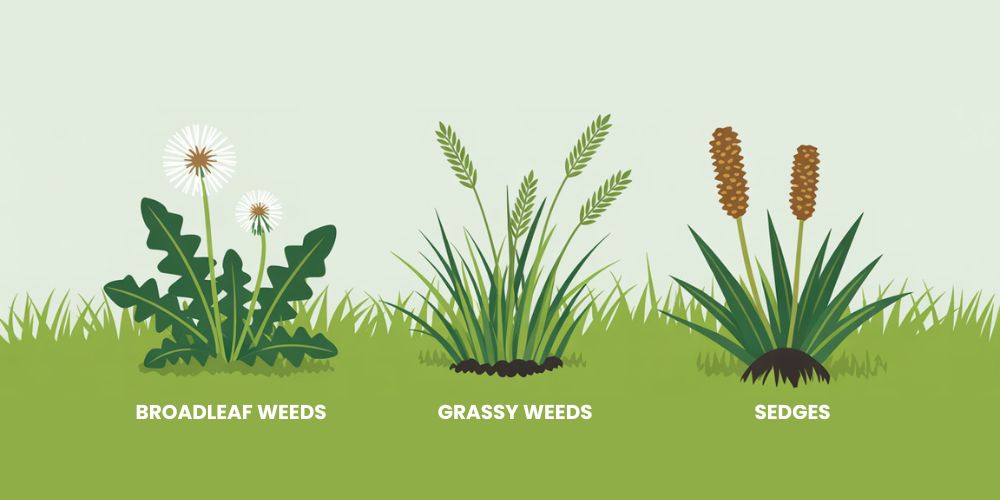
1. Broadleaf Weeds
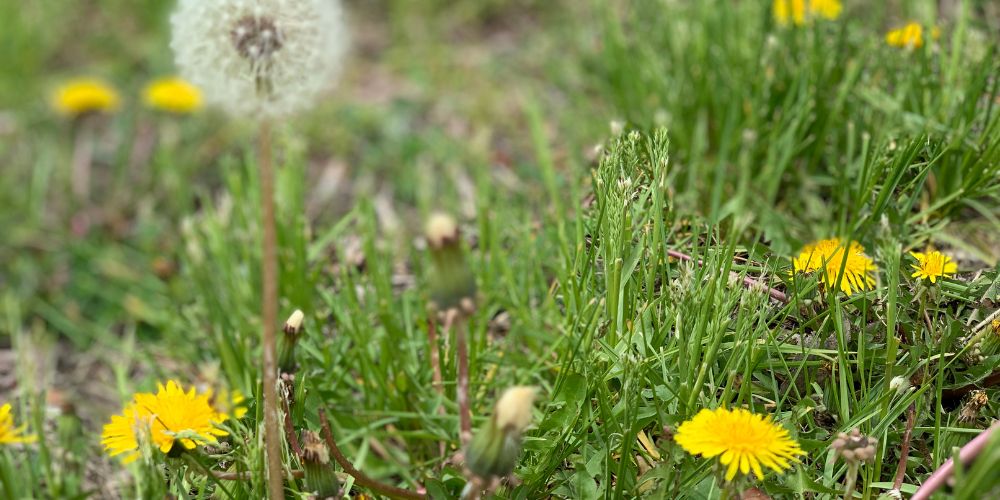
These are easy to spot because they have wider leaves and often grow in clusters.
Examples include dandelions, clover, and plantain.
They typically thrive in thin, nutrient-poor lawns.
2. Grassy Weeds
These weeds look similar to turfgrass, making them harder to identify.
Crabgrass, goosegrass, and foxtail fall under this category.
They grow aggressively in hot weather and bare soil patches.
3. Sedges
Sedges aren’t grasses—they’re grass-like plants with triangular stems.
Yellow nutsedge and kyllinga spread quickly in wet or poorly drained soil.
They’re tougher to control because they reproduce through underground tubers.
How to Identify the Weeds in Your Lawn
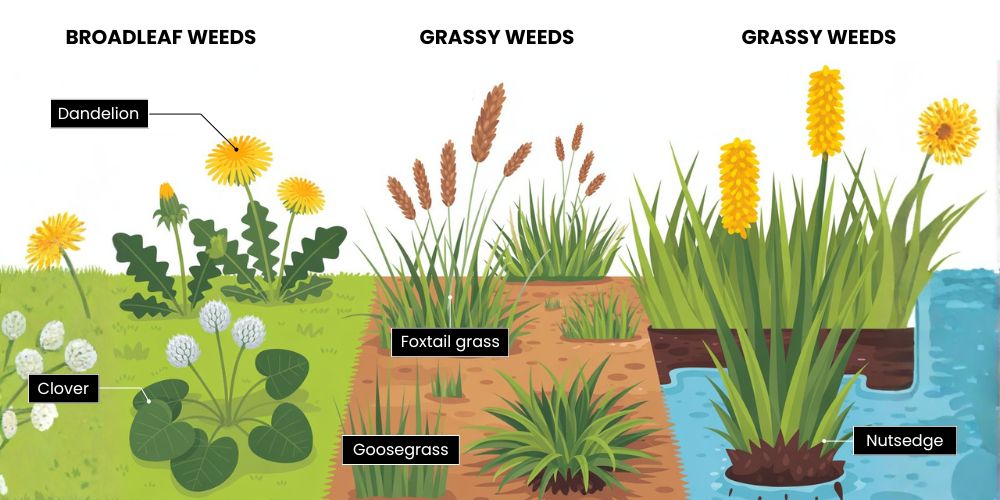
Look at the leaf shape, growth pattern, and stem structure.
Broadleaf weeds have noticeable veins; grassy weeds blend in with your turf; sedges have stiff, waxy leaves and triangle-shaped stems.
If unsure, compare them with resources like the University of California’s Integrated Pest Management Weed Gallery.
Quick Identification Table:
| Weed Type | Key Features | Common Examples |
|---|---|---|
| Broadleaf | Wide leaves, visible venis | Dandelion, Clover |
| Grassy | Looks like turfgrass, jointed stems | Crabgrass, foxtail |
| Sedges | Triangular stems, waxy leaves | Nutsedge, kyllinga |
Best Ways to Get Rid of Weeds in a Lawn
1. Manual Removal
Hand-pull weeds when the soil is damp for easy root extraction. Use a weeding tool for deep-rooted plants like dandelions.
Best for small infestations.
2. Spot Spraying
Apply a selective herbicide to individual weeds.
This prevents damage to the surrounding grass.
Ideal for broadleaf weeds scattered across the yard.
3. Pre-Emergent Control
Pre-emergent herbicides stop weed seeds from sprouting.
They are especially effective against crabgrass and annual grassy weeds.
Apply before soil temperatures hit about 55°F in spring.
4. Improve Lawn Health
Thicker, healthier grass blocks weed growth naturally.
Aeration, overseeding, and proper fertilization create strong turf.
Weeds struggle when they don’t get sunlight or space.
Best Weed Killer for Lawns (Types Only — Not Product-Based)
A Quick Overview:
| Herbicide Type | What It Does | Best Uses / Targets |
|---|---|---|
| Selective Herbicides | Targets specific weeds (usually broadleaf) without harming grass. | Dandelions, clover, and similar broadleaf weeds. |
| Non-Selective Herbicides | Kills everything it touches. | Spot treatment on sidewalks, gravel areas, or places you plan to reseed. |
| Pre-Emergent Herbicides | Prevents weed seeds from germinating. | Crabgrass and other annual grassy weeds. |
| Post-Emergent Herbicides | Kills weeds that are already visible; different formulas target specific weed types. | Broadleaf weeds, sedges, grassy weeds; many universities recommend this approach for nutsedge control. |
1. Selective Herbicides
Selective herbicides target specific types of weeds, most commonly broadleaf varieties, without damaging your lawn grass. They work by interfering with the weed’s internal growth processes while allowing turfgrass to remain unharmed. This makes them a great solution for dandelions, clover, plantain, and other similar weeds that often appear in thin or stressed lawns.
2. Non-Selective Herbicides
Non-selective herbicides kill any vegetation they come in contact with, which makes them effective but also requires careful use. These should be applied only in areas where you do not want any plants to grow, such as sidewalks, gravel driveways, fence lines, or sections you plan to completely remove and reseed. They are not suitable for use across the lawn.
3. Pre-Emergent Herbicides
Pre-emergent herbicides work by forming a protective barrier in the soil that stops weed seeds from sprouting. They are especially useful for preventing annual grassy weeds such as crabgrass and goosegrass. When applied at the correct time, typically early spring when soil temperatures begin reaching germination levels, they significantly reduce the amount of new weed growth throughout the season.
4. Post-Emergent Herbicides
Post-emergent herbicides are designed to treat weeds that have already appeared in your lawn. These formulas vary depending on the type of weed you need to control, whether it is broadleaf weeds, grassy weeds, or sedges. Many university turf programs recommend post-emergent treatments for stubborn weeds like yellow nutsedge because they target the weed while it is actively growing.
How to Prevent Weeds From Coming Back
Preventing weeds is mostly about strengthening your lawn. A dense, healthy turf naturally blocks weeds from ever taking hold. Here’s how you keep them away long-term:
1. Water Deeply but Infrequently
Deep watering encourages grass roots to grow several inches into the soil, making the turf thicker and more competitive. Shallow, daily watering leads to weak grass that weeds can easily outgrow.
If you struggle with watering consistency, learning how irrigation really works can help. Our guide to irrigation systems explains how they support healthier, weed-resistant lawns.
2. Mow at the Right Height
Cutting too short exposes soil to sunlight — and that triggers weed germination. Taller grass shades the soil, cools the surface, and naturally prevents weed seeds from sprouting. Most lawns do best at 2.5–3.5 inches, depending on the grass type.
3. Fertilize Based on a Soil Test
Feeding your lawn without knowing what it needs can make problems worse. Clover and other weeds thrive in low-nitrogen lawns, while sedges love poorly drained soil.
A soil test gives exact nutrient needs, ensuring grass—not weeds—gets the advantage.
Reliable testing source: USDA Soil Testing Resources.
4. Overseed Thin or Bare Spots
Bare patches act like open invitations for weed seeds. Spreading new grass seed thickens the lawn and crowds out emerging weeds before they get established.
5. Improve Soil Health with Aeration
Aeration loosens compacted soil, improves oxygen flow, and boosts root growth. Weeds like compacted soil; grass does not. Better soil structure = fewer weeds.
6. Apply Pre-Emergent Weed Control Seasonally
A spring pre-emergent stops weeds like crabgrass before they sprout. This protects the lawn during the peak weed-germination period.
7. Maintain Lawn Consistency
Great lawns aren’t created with one-time treatments—they thrive with routine care. Regular mowing, seasonal fertilizing, and proper watering eliminate the conditions that weeds depend on.
Conclusion
Keeping weeds out of your lawn comes down to a combination of removing existing weeds, strengthening your grass, and preventing future growth with consistent care. When you understand why weeds appear and choose the right treatment—whether manual removal, pre-emergent control, or selective herbicides—you can maintain a lawn that stays thick, green, and healthy year-round. A strong, well-maintained lawn is always your best defense against weeds.
If you ever need professional help restoring or maintaining a weed-free lawn, The Works Lawn Service is here to take care of everything for you.